Queso Manchego vs Pecorino Romano Cheese
Queso Manchego
Pecorino Romano Cheese
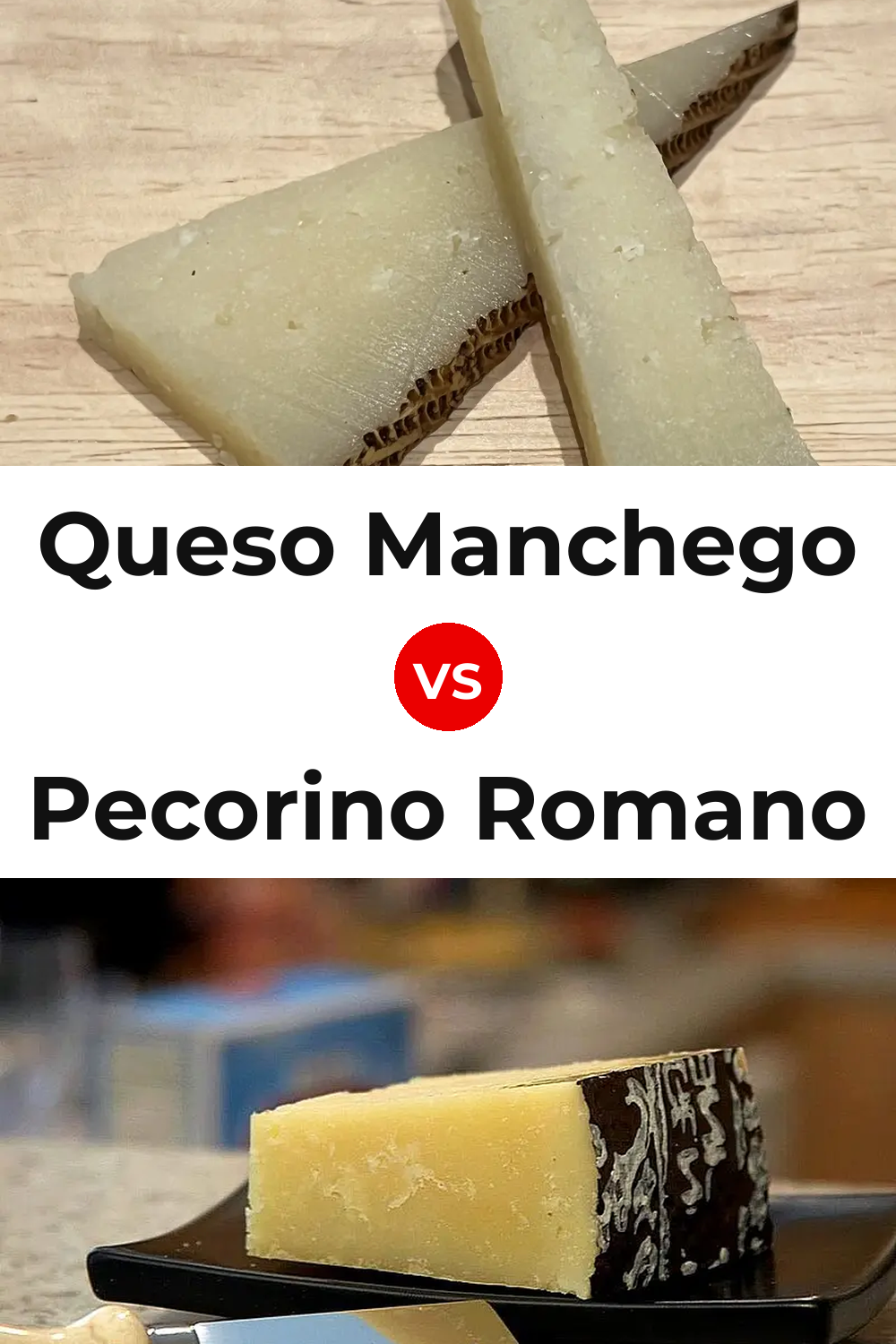
Queso Manchego is a compact sheep-milk cheese from Spain, while Pecorino Romano Cheese is hard and made from sheep milk, originating in Italy.
What Is Queso Manchego?
Manchego is a PDO-protected cheese made in the La Mancha region of Spain, exclusively from the milk of Manchega sheep. It has a firm and compact consistency and a buttery texture, with a distinctive flavor that is well-developed and tangy, often with a slight piquancy in older cheeses. Manchego is aged for a minimum of two months and up to two years, developing a deeper flavor and harder texture with time.
What Is Pecorino Romano Cheese?
Pecorino Romano is one of the most ancient types of cheese and a staple in Italian cuisine. Made from sheep's milk, it is salty and sharp, traditionally used grated over pasta dishes, incorporated into sauces, or eaten on its own with a drizzle of honey. Pecorino Romano is predominantly produced in the regions of Lazio, Sardinia, and Tuscany.
What's the Difference Between Queso Manchego and Pecorino Romano Cheese?
- Origin: Queso Manchego (Spain), Pecorino Romano Cheese (Italy)
- Texture: Queso Manchego (Compact), Pecorino Romano Cheese (Hard)
- Rind: Queso Manchego (Pleita and flor imprints), Pecorino Romano Cheese (Pale yellow to brown or black)
- Aging: Queso Manchego (Fresco (2 weeks), Semi-curado (3 weeks to 4 months), Curado (3-6 months), Viejo or Anejo (1 year)), Pecorino Romano Cheese (5–8 months or longer)
- Taste: Queso Manchego (Slightly acidic), Pecorino Romano Cheese (Sharp, salty)
Side-by-Side Comparison
| Queso Manchego | Pecorino Romano Cheese | |
|---|---|---|
| Country of Origin | Spain | Italy |
| Specific Origin | La Mancha Region | Lazio, Sardinia, Grosseto |
| Milk Type | Sheep's milk | Sheep's milk |
| Milk Treatment | Raw or pasteurized | — |
| Texture | Compact | Hard |
| Rind | Pleita and flor imprints | Pale yellow to brown or black |
| Aging | Fresco (2 weeks), Semi-curado (3 weeks to 4 months), Curado (3-6 months), Viejo or Anejo (1 year) | 5–8 months or longer |
| Taste | Slightly acidic | Sharp, salty |
Pairing Comparison
What works with each cheese — wines, foods, breads, and more.
| Queso Manchego | Pecorino Romano Cheese | |
|---|---|---|
| Best Pairings | Albariño, Almonds, Cava, Chorizo, Dried Figs, Dried Fruit, Tequila | Olives |
| Other Good Pairings | Apples, Apricot, Asian Pear, Cabernet Sauvignon, Crackers, Dirty Martini, Fig Jam, Grapes, Green Apple, Grüner Veltliner, Hard Cider, Honey, Honeycomb, Madeira, Malbec, Pear, Port, Scotch | Amaro, Cabernet Sauvignon, Malbec, Pistachios |
Which would you pick?
One click, anonymous — see what others chose.
Where to buy Queso Manchego and Pecorino Romano Cheese
Queso Manchego
Pecorino Romano Cheese
Taste Comparison: Does Queso Manchego Taste Like Pecorino Romano Cheese?
Queso Manchego reads as slightly acidic, while Pecorino Romano Cheese brings sharp, salty character. More specifically, Queso Manchego shows slightly acidic with a sharp background of ovine milk components, increases over ripening and develops piquant notes, while Pecorino Romano Cheese leans toward bright, tangy notes balancing sheepy sweetness with salinity, crumbles nicely. Aging plays into this as well. Queso Manchego at fresco (2 weeks), semi-curado (3 weeks to 4 months), curado (3-6 months), viejo or anejo (1 year) develops a different profile than Pecorino Romano Cheese at 5–8 months or longer.
Can You Substitute Queso Manchego for Pecorino Romano Cheese?
In most recipes, Queso Manchego and Pecorino Romano Cheese can be swapped with reasonable results. Both are sheep-milk cheeses, so the base character carries over. Expect compact bite and body where the recipe calls for hard. Flavor-wise, Queso Manchego reads as slightly acidic while Pecorino Romano Cheese brings sharp, salty notes.
Which Is Better, Queso Manchego or Pecorino Romano Cheese?
There's no single winner. It depends on your recipe and the profile you want. If you want a compact cheese, go with Queso Manchego. For a hard profile, Pecorino Romano Cheese is the better fit. Flavor-wise, Queso Manchego suits recipes that want slightly acidic notes, while Pecorino Romano Cheese fits dishes calling for sharp, salty.
Frequently Asked Questions
Is Queso Manchego the same as Pecorino Romano Cheese?
No, they're distinct cheeses. Queso Manchego originates in Spain, while Pecorino Romano Cheese comes from Italy. Aging also differs: Queso Manchego is typically aged fresco (2 weeks), semi-curado (3 weeks to 4 months), curado (3-6 months), viejo or anejo (1 year), Pecorino Romano Cheese 5–8 months or longer.
Is Queso Manchego similar to Pecorino Romano Cheese?
Somewhat. They share a sheep-milk base but diverge in texture and flavor.
Can I substitute Queso Manchego for Pecorino Romano Cheese?
You can, but expect a shift in bite and mouthfeel.
Does Queso Manchego taste like Pecorino Romano Cheese?
Queso Manchego reads as slightly acidic, while Pecorino Romano Cheese is sharp, salty.
What is Queso Manchego made of?
Queso Manchego is made from sheep milk (raw or pasteurized), using animal rennet. It's typically aged fresco (2 weeks), semi-curado (3 weeks to 4 months), curado (3-6 months), viejo or anejo (1 year). It originates in Spain.
What is Pecorino Romano Cheese made of?
Pecorino Romano Cheese is made from sheep milk, using rennet rennet. It's typically aged 5–8 months or longer. It originates in Italy.
Which should I choose, Queso Manchego or Pecorino Romano Cheese?
It depends on the dish. The texture difference is the biggest practical tell. Queso Manchego is compact, while Pecorino Romano Cheese is hard.
See full profiles: Queso Manchego and Pecorino Romano Cheese.